Zero-Touch DevOps: The Self-Healing Pipeline Architecture
How self-healing pipeline architectures eliminate click-ops, reduce MTTR to seconds, and enable infrastructure that automatically detects, diagnoses, and repairs production incidents without human intervention.
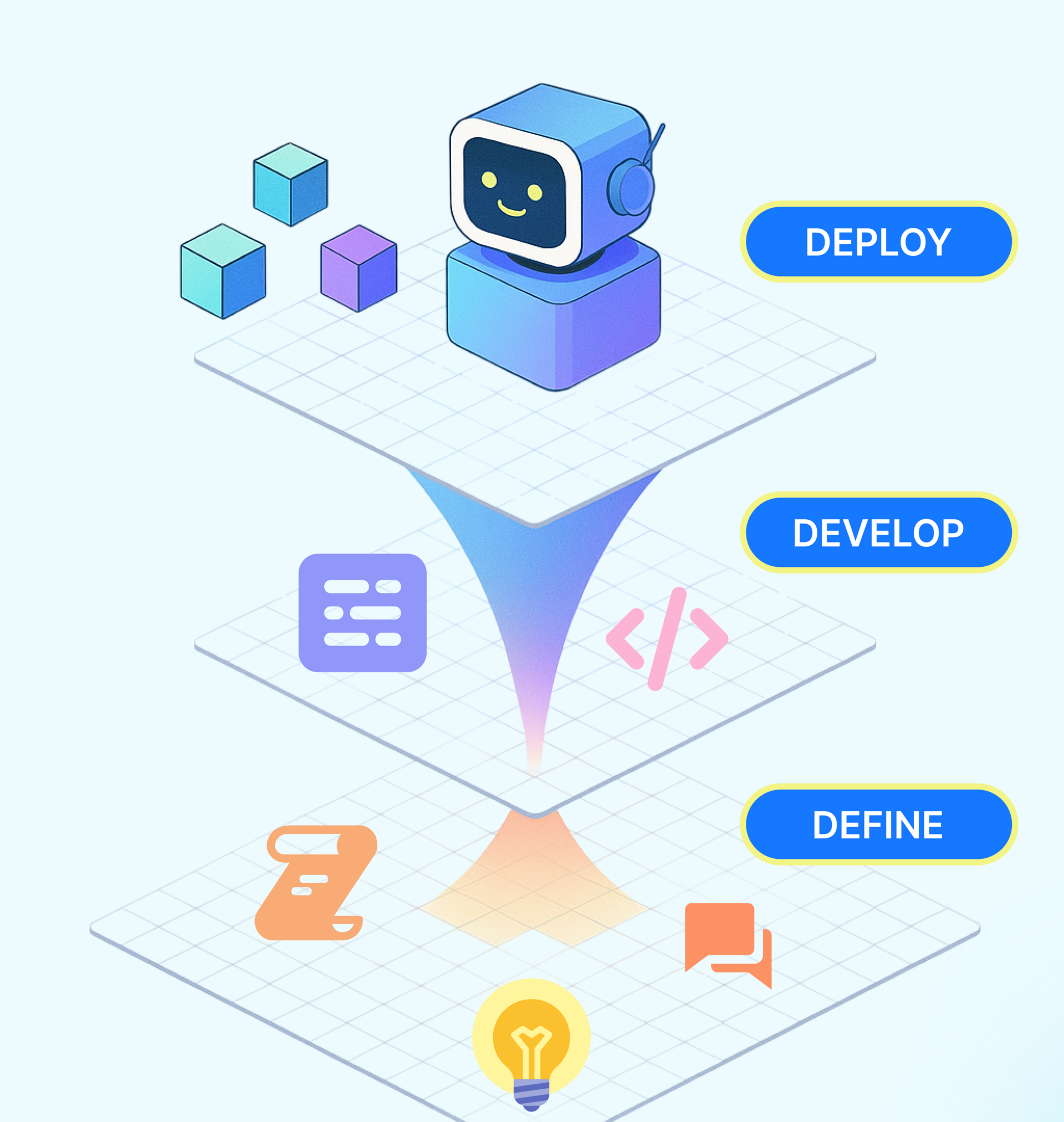

Zero-touch DevOps eliminates manual click-ops by automating every stage of the infrastructure lifecycle — provisioning, deployment, scaling, and self-healing. This article covers the architecture, problems solved, and practical implementation strategies.
What is zero-touch DevOps and how does it eliminate manual operations?
Zero-touch DevOps is an architecture where every operation — provisioning, deployment, scaling, and recovery — is defined in code and executed automatically, with self-healing capabilities that detect, diagnose, and repair incidents without human intervention.
Sources: Google SRE Workbook · CNCF Pipeline Maturity Model
The End of the Click-Ops Era
For decades, infrastructure management has been a manual craft. Engineers SSH into servers, edit config files by hand, and hope nothing breaks during deployment. When something does break — and it always does — someone manually investigates, diagnoses, and applies a fix.
This is click-ops: the anti-pattern of clicking through dashboards and typing commands into terminals. The cost of this approach compounds rapidly:
- Mean Time to Recovery (MTTR) measured in hours or days, not seconds
- Human error as the leading cause of production incidents
- On-call burnout from repeated fire drills for the same class of failures
- Inconsistent states because manual changes drift from documented configurations
What Zero-Touch Actually Means
Zero-touch DevOps is an architecture where every operation — provisioning, deployment, scaling, and recovery — is defined in code and executed automatically. The pipeline doesn't just deploy software; it manages the entire lifecycle of the infrastructure that runs it.
The "self-healing" aspect is the critical differentiator. A traditional CI/CD pipeline automates the happy path: code passes tests, gets deployed, and everything works. A self-healing pipeline also automates the unhappy path — when a deployment fails, a service degrades, or an incident occurs.
The Problems Zero-Touch Solves
1. Configuration Drift
Manual changes accumulate over time. Someone tweaks a security group, someone else adjusts a timeout, and before anyone notices, the running environment no longer matches the repository state. Zero-touch pipelines enforce git as the single source of truth — if it's not in git, it doesn't exist.
2. Toil Reduction
Gartner estimates that platform engineering teams spend 60-80% of their time on operational toil rather than building capabilities. Self-healing pipelines absorb this toil by automating incident response, capacity planning, and routine maintenance.
3. Deployment Bottlenecks
Manual approval gates, staging environment contention, and deployment window coordination slow delivery to a trickle. Automated quality gates and progressive delivery patterns enable deployments on every commit without sacrificing reliability.
4. Incident Response Lag
The average time to detect a production incident is 19 minutes; the average time to respond is 1 hour. Self-healing pipelines reduce both to near-zero by embedding observability, automated diagnostics, and remediation workflows directly into the pipeline.
Architecture of a Zero-Touch Pipeline
Layer 1: Git as the Single Source of Truth
Every configuration, every policy, every piece of infrastructure code lives in git. Changes flow through pull requests with automated review gates. There are no manual changes outside the repository. This isn't just version control — it's the foundation of auditability, rollback capability, and team collaboration.
Layer 2: Automated Provisioning (Day 0)
Infrastructure is provisioned from code using infrastructure-as-tool platforms. The pipeline creates environments, networks, storage, and identity configurations automatically. Environments are ephemeral — development environments spin up on branch creation and tear down on merge.
Layer 3: CI/CD with Automated Quality Gates
Every commit triggers a pipeline that runs security scans, dependency checks, unit tests, integration tests, and performance benchmarks. Quality gates enforce standards — no pull request merges unless all gates pass. Security scanning is embedded, not bolted on.
Layer 4: Self-Healing Operations (Day 2+)
This is where the architecture becomes truly different. The pipeline doesn't stop at deployment:
- Automated health checks monitor service health continuously
- Anomaly detection identifies deviations from normal behaviour patterns
- Root cause analysis correlates metrics, logs, and traces to identify the source of issues
- Automated remediation applies fixes — restart services, roll back deployments, scale resources, or reconfigure network policies
- Post-incident learning feeds incident data back into the pipeline to prevent recurrence
The Observability Foundation
Self-healing pipelines require deep observability. You can't automate what you can't see. Three pillars are essential:
- Metrics: Real-time performance data from every component, aggregated and alertable
- Logs: Structured, searchable logs from every service, correlated by trace ID
- Traces: End-to-end request traces that follow a single request across service boundaries
These aren't optional add-ons — they're built into the pipeline from day one. Every deployment includes observability configuration as part of the infrastructure code.
Real-World Impact
Organisations that have implemented zero-touch DevOps report:
- 90% reduction in MTTR — incidents are detected and resolved before users notice
- 10x deployment frequency — from monthly to multiple times per day
- 70% reduction in change-related failures — automated quality gates catch issues early
- Significant improvement in developer satisfaction — engineers spend time building, not firefighting
Getting Started
Transitioning to zero-touch DevOps is a journey, not a destination. Start by:
- Eliminating manual changes — enforce git-only configuration from day one
- Automating your first deployment pipeline — get code flowing from commit to production without human intervention
- Adding observability — instrument every service with metrics, logs, and traces
- Implementing automated rollback — if a deployment causes errors, the pipeline should automatically revert
- Building remediation playbooks — codify your incident response into automated actions
- Expanding gradually — add more automation as you gain confidence and maturity
The Future
Zero-touch DevOps is evolving toward autonomous operations — pipelines that don't just respond to incidents but predict them. Machine learning models trained on historical operational data can identify patterns that precede failures and trigger preventive actions before anything breaks.
The organisations that embrace this approach now will have a decisive competitive advantage: faster delivery, higher reliability, and teams that are energised by building rather than maintained by firefighting.
Sources: Google SRE Workbook, CNCF Pipeline Maturity Model, Gartner Platform Engineering Research
Feature image: Vinaykumar-lnb / CC BY-SA 4.0 / Wikimedia Commons.
