Merkle Tree Certificates: How Cloudflare Is Rewriting Web PKI for the Post-Quantum Era
Merkle Tree Certificates replace per-certificate digital signatures with compact inclusion proofs, solving the post-quantum signature size crisis that threatens to break TLS handshakes at internet scale.

The web's trust infrastructure faces an existential threat from quantum computers. Traditional certificates rely on individual digital signatures whose sizes explode when migrated to post-quantum algorithms like ML-DSA. Merkle Tree Certificates solve this by grouping issued certificates into a single hash tree, signing only the root — and proving each certificate's authenticity with a proof under 1 KB. Cloudflare is now issuing these certificates as a publicly trusted CA starting in Q1 2027.
How do Merkle Tree Certificates keep post-quantum signatures small enough for TLS?
In a traditional certificate, every leaf is signed individually — so a five-signature chain with ML-DSA-44 balloons to tens of kilobytes. An MTC batches many certificates into one append-only Merkle tree. The CA signs only the tree root once. When a browser connects, the server sends the leaf cert plus an inclusion proof: roughly log₂(n) sibling hashes needed to reconstruct the root. For millions of certificates in the tree, that's typically 2–3 hashes — about 64–96 bytes at SHA-256 width. The browser then verifies the CA's signature on the reconstructed root. In Cloudflare's landmark-relative mode, tree heads are distributed out-of-band via Chrome's Quantum-resistant Root Store, so the live handshake adds under 1 KB of overhead — well within browser tolerance.
Sources: IETF Internet-Draft — Merkle Tree Certificates (draft-ietf-plants-merkle-tree-certs) · Cloudflare Blog — Building a Post-Quantum CA with MTCs (Sept 29, 2026) · F5 Labs — 2026 State of PQC on the Web (Sept 22, 2026) · NIST Post-Quantum Cryptography Standards — FIPS 203/204/205
When you type a URL into your browser, an invisible chain of trust validates that you're connecting to the right server — not a man-in-the-middle. This chain, known as the Web Public Key Infrastructure (WebPKI), has served the internet remarkably well for three decades. But a new threat looms: cryptographically relevant quantum computers (CRQCs) capable of breaking RSA and ECDSA, the mathematical foundations of every certificate on the web today.
The migration to post-quantum cryptography (PQC) is underway. Encryption — the key agreement that establishes a shared secret during TLS handshakes — has largely been solved. Cloudflare deployed ML-KEM (the NIST-standardized post-quantum key encapsulation mechanism) as a hybrid default, and by early 2026, over 52% of requests to Cloudflare's edge were encrypted with PQ algorithms.
Authentication is a different problem entirely. And it's one that threatens to break the web if we don't redesign how certificates work.
This article explores Merkle Tree Certificates (MTCs) — an emerging IETF-draft certificate format designed specifically to solve the post-quantum certificate size crisis — and examines Cloudflare's bold move to become a post-quantum Certificate Authority, issuing these certificates for free starting in Q1 2027.
The Post-Quantum Signature Size Crisis
To understand why Merkle Tree Certificates exist, we first need to understand the problem they solve.
Traditional vs. Post-Quantum Signatures
In a traditional TLS handshake, the server presents a certificate chain: a leaf certificate for the domain, an intermediate CA certificate, and often several Certificate Transparency (CT) log timestamps. Each is signed with a relatively small digital signature:
| Algorithm | Signature Size | Public Key Size |
|---|---|---|
| ECDSA P-256 | ~64 bytes | 32 bytes |
| RSA-2048 | ~256 bytes | 256 bytes |
| ML-DSA-44 (NIST PQC) | ~2,420 bytes | ~2,400 bytes |
The numbers are stark. ML-DSA-44 signatures are roughly 38 times larger than ECDSA-P256. A typical certificate chain carrying five signatures and two public keys would balloon from a few hundred bytes to tens of kilobytes — a latency hit that browser vendors have flatly refused to ship.
As Cloudflare's engineering team put it in their technical write-up: "Don't log what you issue, issue by logging."
The Harvest-Now-Decrypt-Later Threat
This isn't an academic exercise. Adversaries are already performing "harvest now, decrypt later" attacks — intercepting and storing encrypted traffic today, waiting for a quantum computer capable of breaking it in the future. Organizations handling sensitive data (government, healthcare, finance) with certificates valid for 10+ years are at particular risk. NIST has set 2029 as the target date for completing the post-quantum migration across the internet.
What Are Merkle Tree Certificates?
Merkle Tree Certificates (MTCs) are an IETF draft specification developed within the PLANTS working group that fundamentally reimagines how a certificate proves its authenticity. Instead of embedding a per-certificate digital signature, an MTC replaces the traditional signature with a compact Merkle tree inclusion proof.
How It Works
The architecture operates in two phases:
- Batching and Tree Construction: The Certificate Authority periodically collects certificates it has issued and appends them as leaves to an append-only Merkle tree — a binary hash tree where each node is the hash of its children, and the root represents the entire set.
- Signing the Root, Not Each Certificate: The CA signs only the Merkle tree root (the "tree head"), not individual certificates. This single signature is large (post-quantum), but it's a one-time cost.
When a browser connects to an MTC-backed server, the server presents:
- The leaf certificate
- A Merkle inclusion proof — a short chain of hash values (typically under 1 KB) proving the certificate is a genuine leaf in the tree
- Optionally, a cosigned tree head (in "standalone" mode)
The browser validates the certificate by verifying that the inclusion proof correctly reconstructs a tree root whose signature it already trusts.
The MTC TLS handshake flow works as follows:
sequenceDiagram
    participant Server
    participant Browser
    Server->>Browser: Leaf cert + inclusion proof
    Server->>Browser: Cosigned tree head (standalone mode)
    Browser->>Browser: Verify proof reconstructs trusted root
    Browser->>Browser: Validate CA signature on root
Two Modes of Operation
Cloudflare has defined two variants:
| Mode | Description | Handshake Payload |
|---|---|---|
| Standalone MTC | Certificate carries a cosigned tree head alongside the inclusion proof | ~1–2 KB |
| Landmark-Relative MTC | Browser has already pulled recent tree heads out-of-band; server sends only one public key, one signature, and an inclusion proof under 1 KB | < 1 KB |
The landmark-relative mode is particularly elegant: it leverages Chrome's newly launched Quantum-resistant Root Store to distribute tree heads out-of-band, so the actual TLS handshake adds negligible overhead.
Cloudflare's Post-Quantum Certificate Authority
In September 2026, Cloudflare made a landmark announcement: it is becoming a publicly trusted Certificate Authority. This is not merely a technical experiment — it is a strategic commitment to making post-quantum authentication accessible to everyone on the internet.
How Cloudflare Is Becoming a CA
Becoming a trusted CA from scratch normally takes years, primarily because old devices and browsers must learn about new root certificates through their respective root programs (Chrome, Apple, Microsoft, Mozilla). Cloudflare is shortcutting this process by:
- Acquiring root key material from GlobalSign — a publicly trusted root CA — in a deal expected to close within months of the announcement
- Applying to the root programs of Chrome, Apple, Microsoft, and Mozilla simultaneously
- Building compliance and operations infrastructure aligned with the WebPKI's existing policies (CA/Browser Forum requirements, audit frameworks, etc.)
The MTC Issuance Timeline
| Milestone | Status |
|---|---|
| 2025 | IETF draft specification published; broad industry support |
| Early 2026 | Experimental deployment with Chrome Beta 146 — MTCs served to 50% of Chrome Beta users on Cloudflare's free-plan domains |
| September 2026 | Cloudflare announces CA acquisition and formal launch |
| Q1 2027 | Production MTC issuance begins; target inclusion in Chrome's Quantum-resistant Root Store |
"Issue by Logging" — Transparency as a First-Class Property
The most architecturally significant aspect of MTCs is how they treat Certificate Transparency. In the current WebPKI, CT is bolted on: CAs issue certificates and separately submit them to independent CT logs. MTC inverts this relationship.
"Transparency stops being a bolt-on and becomes the issuance mechanism." — Cloudflare Engineering
Each CA runs its own Merkle tree as its issuance log. The tree itself is the transparency log. This eliminates the complexity of coordinating with third-party CT log operators and makes auditing more direct: any party can verify that a certificate was included in the CA's authoritative tree.
Free Issuance at Internet Scale
True to Cloudflare's tradition of offering the strongest available cryptography for free (Free TLS certificates, Universal SSL, Automatic HTTPS Rewrites), Cloudflare has committed to providing standard MTC issuance at no cost. This is a deliberate strategy: if post-quantum certificates are priced as a premium feature, adoption will be slow and fragmented. By making them free, Cloudflare aims to drive network effects that benefit the entire internet.
Why This Matters Beyond Cloudflare
Cloudflare's MTC initiative has implications that extend far beyond its own infrastructure:
1. A Blueprint for the Entire Industry
Cloudflare is not building this in isolation. The MTC specification was developed through the IETF PLANTS working group with broad industry participation. Major CAs including DigiCert and Sectigo have published technical content on the format. Cloudflare's CA launch is intended to catalyze — not monopolize — MTC adoption. They've explicitly stated eagerness to collaborate with any browser vendor interested in deploying MTCs.
2. Solving the Certificate Bottleneck
The F5 Labs 2026 State of PQC report identified the certificate bottleneck as one of the two most critical barriers to post-quantum migration (alongside internal network risks). MTCs directly address this: by keeping handshake overhead under 1 KB even with post-quantum signatures, they remove the performance objection that has blocked PQ certificate deployment.
3. Enabling Hybrid Trust During Transition
Cloudflare's new CA will support both classical certificates and MTCs. This dual-path approach is essential: the internet cannot be upgraded simultaneously. Organizations can adopt MTCs incrementally while maintaining compatibility with legacy systems, defaulting to the most secure authentication method available for each connection.
4. Reducing Dependency on Legacy CA Infrastructure
By acquiring GlobalSign's root material and building a modern CA from the ground up — one where transparency is architecturally embedded rather than bolted on — Cloudflare demonstrates that the WebPKI can evolve without waiting for legacy operators to migrate their entire issuance infrastructure.
Technical Deep Dive: The Merkle Tree Architecture
For those who want to understand the mechanics more deeply, here's how the Merkle tree itself works in the context of MTCs.
The Hash Chain
A Merkle tree is a binary tree where:
- Leaf nodes are hashes of individual certificates (or certificate batches)
- Internal nodes are hashes of their children's concatenated hashes
- The root is a single hash representing the entire tree
flowchart TD
    Root["Root Hash"]
    A["Node A"]
    B["Node B"]
    C1["Cert 1"]
    C2["Cert 2"]
    C3["Cert 3"]
    C4["Cert 4"]
    Root --> A
    Root --> B
    A --> C1
    A --> C2
    B --> C3
    B --> C4
To prove that Cert2 is in the tree, you only need:
- The hash of Cert1 (sibling of Cert2)
- The hash of Node B (sibling of Node A)
This is the inclusion proof — typically 2–3 hashes for a tree containing millions of certificates. At ~32 bytes per SHA-256 hash, that's roughly 64–96 bytes. Even with post-quantum hash functions producing larger outputs, the proof stays under 1 KB.
Security Properties
| Property | Description |
|---|---|
| Append-only | Once a certificate is in the tree, it cannot be removed or modified without changing the root hash |
| Tamper-evident | Any modification to any leaf changes the root hash, which the CA signature proves was not authorized |
| Efficient verification | Proving membership requires O(log n) hash computations regardless of tree size |
| Publicly auditable | Anyone can download the tree and verify every certificate it contains |
The CT Integration
In traditional WebPKI, Certificate Transparency operates as an append-only log where CAs submit certificates and third-party monitors audit them. In MTCs, the Merkle tree is the CT log. The CA's tree head signature serves as both the authenticity proof and the transparency commitment. This unification simplifies the architecture significantly:
- No coordination with independent CT log operators
- Single source of truth for certificate issuance
- Built-in consistency proofs via the Merkle structure itself
The Road to 2029
NIST's 2029 target for completing the post-quantum migration is ambitious. Here's where things stand as of October 2026:
What's Solved
- Encryption (Key Agreement): ML-KEM deployed by Cloudflare, supported in all major browsers. Over 52% of Cloudflare traffic uses PQ key agreement.
- Standards: ML-KEM (FIPS 203), ML-DSA (FIPS 204), and SLH-DSA (FIPS 205) are finalized NIST standards.
- Library Support: Rustls, OpenSSL, and BoringSSL all support PQC algorithms.
What Remains
- Authentication (Signatures): MTCs are the leading solution but not yet deployed at scale. Cloudflare's CA launch in Q1 2027 is the first major production deployment.
- Browser Integration: Chrome's Quantum-resistant Root Store is in development; Apple, Microsoft, and Mozilla must each add support through their respective root programs.
- Legacy Infrastructure: Millions of servers, IoT devices, and embedded systems must be upgraded — many of which cannot receive software updates.
- Certificate Authority Ecosystem: Beyond Cloudflare, traditional CAs need to build MTC issuance infrastructure and gain trust in the new root stores.
The F5 Labs Data Point
F5 Labs' 2026 report, based on active TLS telemetry from the top 1 million domains, found that while CDN-dependent PQC adoption is high (largely driven by Cloudflare's deployment), organic enterprise adoption remains low. Most organizations are still waiting for a performant PQ certificate solution — which is exactly what MTCs provide.
Implications for Security Practitioners
For engineers and security leaders, the implications are clear:
- Start inventorying your certificate portfolio now. Identify certificates with long validity periods that are most vulnerable to harvest-now-decrypt-later attacks.
- Monitor MTC adoption. When Cloudflare begins production issuance in Q1 2027, test your infrastructure against MTC-backed endpoints. The landmark-relative mode may require client-side updates.
- Plan for hybrid deployments. Your PKI will need to support both classical and MTC certificates during the transition period. Design for graceful degradation.
- Evaluate internal PKI impact. Kubernetes mTLS, service meshes, and IoT device provisioning all rely on certificate chains. The size and format changes from MTCs will require architecture updates in these systems.
- Watch the root programs. Chrome, Apple, Microsoft, and Mozilla each have different timelines for adding new roots to their trust stores. Cloudflare's inclusion in Chrome's Quantum-resistant Root Store is the first step; multi-browser coverage determines real-world viability.
Conclusion
Merkle Tree Certificates represent one of the most significant architectural shifts in the WebPKI since Certificate Transparency was introduced. By reimagining certificates not as individually signed documents but as members of a transparent, append-only Merkle tree, MTCs solve the post-quantum signature size problem that has blocked PQ authentication deployment for years.
Cloudflare's decision to become a Certificate Authority — acquiring root material from GlobalSign, building modern issuance infrastructure, and committing to free MTC issuance — is a bold move that could accelerate the entire internet's transition to post-quantum cryptography. Their experimental deployment with Chrome Beta 146, serving MTCs to millions of users, demonstrated feasibility. Production issuance in Q1 2027 will demonstrate scale.
The quantum threat is not imminent — but it is inevitable. The organizations that start preparing now, and the engineers who understand these architectures before they become standard, will be the ones building a secure internet for the post-quantum era.
References
- Merkle Tree Certificates (MTC) Explained — Encryption Consulting
- Building a Post-Quantum Certificate Authority with Merkle Tree Certificates — Cloudflare Blog, Sept 29, 2026
- Cloudflare Becomes a Post-Quantum CA, Betting on MTCs — HWBusters, Sept 30, 2026
- Cloudflare Proposes MTCs to Solve Post-Quantum TLS Performance — InfoQ, Nov 2025
- Post-Quantum Cryptography (PQC) — Cloudflare SSL/TLS Docs
- 2026 State of PQC on the Web — F5 Labs, Sept 22, 2026
- Cloudflare Will Issue Quantum-Resistant Certificates With Merkle Trees — Quantum Zeitgeist, Sept 29, 2026
- Building a Post-Quantum CA with MTCs — Noise Blog (Cloudflare mirror), Sept 29, 2026
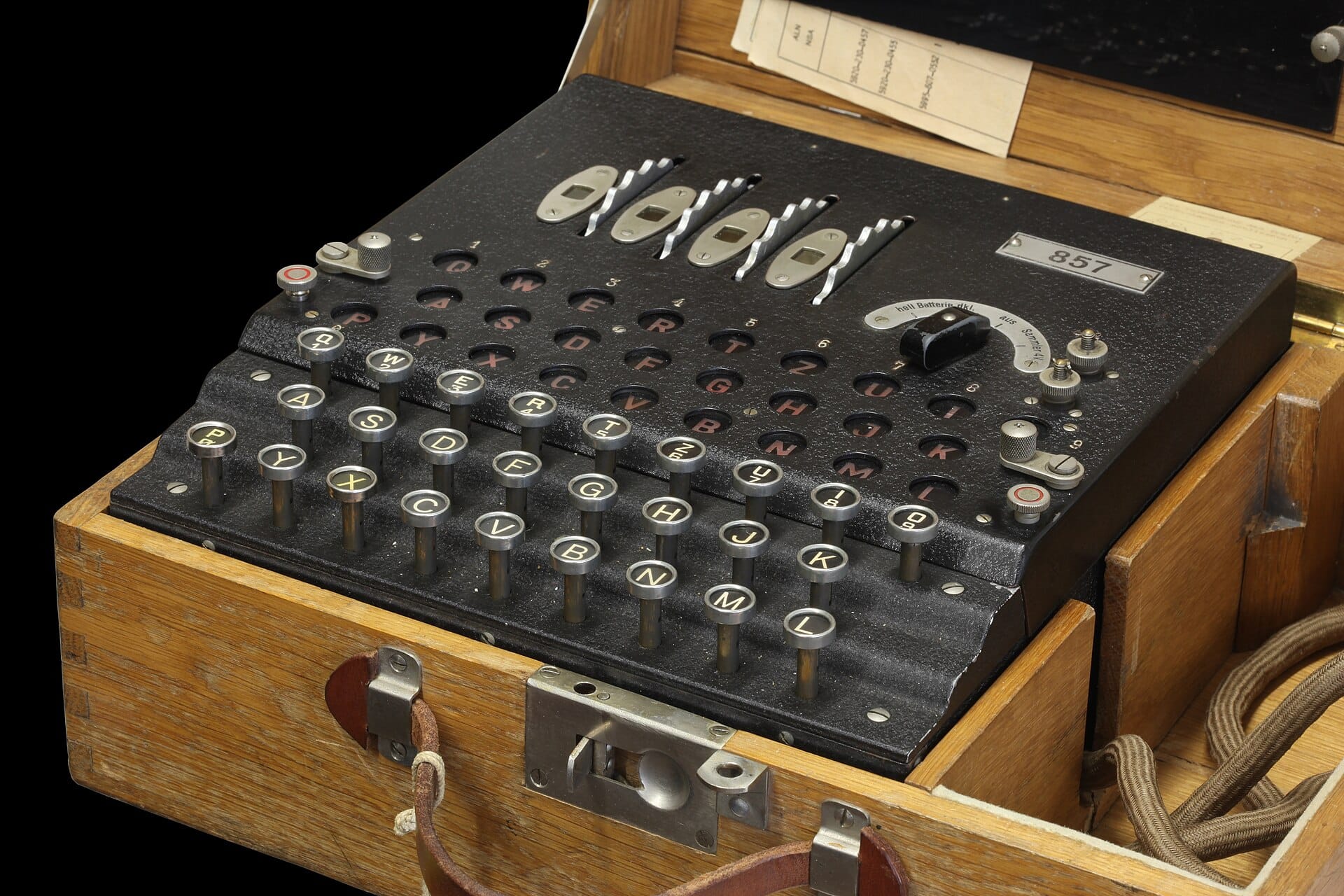
Feature image: Rama / CC BY-SA 2.0 fr / Wikimedia Commons.
